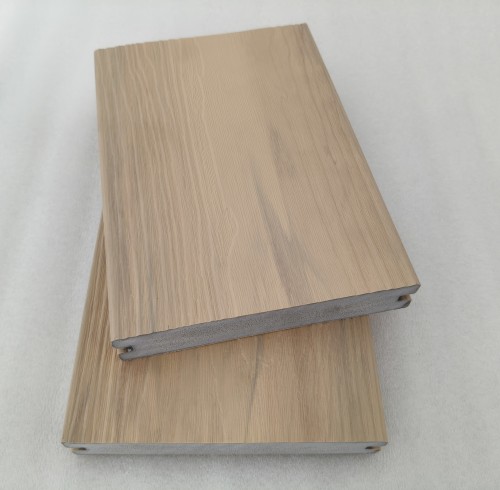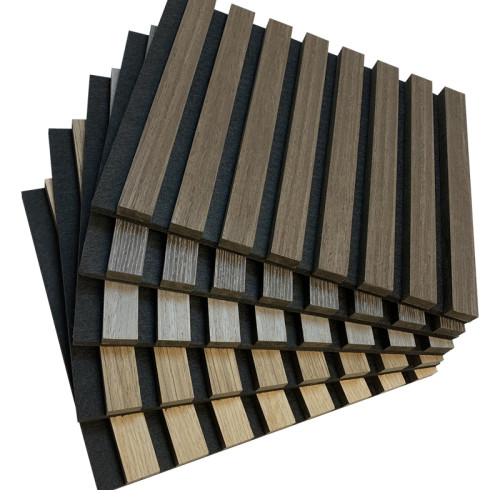
Wood Plastic Composite (WPC) Modification Technologies: Advancing Performance for Sustainable Applications
As global demand for sustainable materials continues to rise, wood-plastic composites (WPC) have emerged as an innovative solution that combines environmental responsibility with high performance. By integrating wood fibers with thermoplastics, WPC significantly reduce plastic consumption while offering durability and versatility for modern applications.
At HOHEcotech®, we continuously focus on material innovation and modification technologies to unlock the full potential of WPC products across construction, landscaping, and industrial applications.
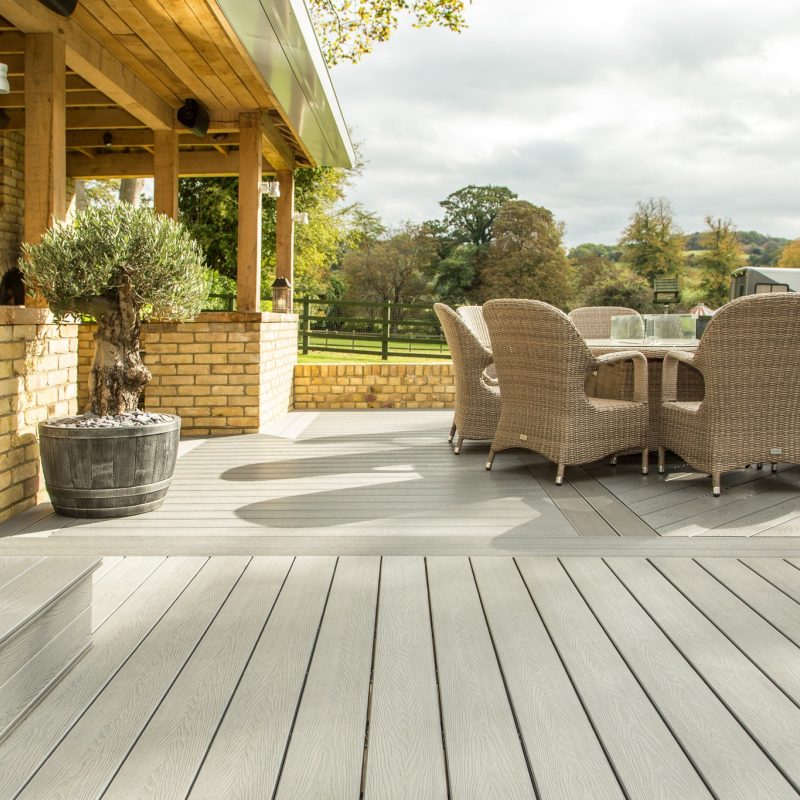
What Makes WPC a Sustainable Choice?
Wood-plastic composites offer a unique balance of performance and sustainability:
Reduced reliance on virgin plastics
Efficient use of recycled materials
Resistance to moisture, corrosion, and insects
Long service life with low maintenance
Recyclable and environmentally friendly
These advantages make WPC an ideal material for outdoor decking, fencing, wall cladding, and urban landscaping projects.
The Challenge: Compatibility & Performance Limitations
Despite their advantages, traditional WPC materials face several technical challenges:
Poor interfacial compatibility between wood fibers and plastic matrix
Sensitivity to weathering and UV exposure
Limited flame resistance
Potential for reduced durability in demanding environments
These limitations are primarily caused by the natural polarity differences between hydrophilic wood fibers and hydrophobic polymers.
Our Solution: Advanced Modification Technologies
To overcome these challenges, modern WPC production relies on a combination of advanced modification techniques:
1. Physical Modification
Physical methods enhance performance without altering the chemical structure:
Co-extrusion technology: Creates a high-performance protective outer layer with a strong inner core
Thermal treatment: Improves fiber stability and reduces moisture absorption
Plasma surface treatment: Enhances surface bonding and durability
Filler optimization: Improves strength and mechanical properties
Result: Better strength, improved weather resistance, and longer product lifespan.
2. Chemical Modification
Chemical treatments significantly improve interfacial bonding:
Reduces hydrophilic hydroxyl groups in wood fibers
Enhances adhesion between fiber and polymer
Removes impurities such as lignin and hemicellulose
Improves durability, stability, and outdoor performance
Result: Stronger, more stable composites with superior long-term performance.
3. Coupling & Hybrid Modification
Coupling agents act as a “molecular bridge” between wood and plastic:
Improve compatibility between different material phases
Reduce internal defects
Enhance overall mechanical and environmental performance
In practice, multi-technique (hybrid) modification delivers the best results.
Why Modification Matters
Material modification is the key to unlocking high-end applications for WPC. With the right technologies, WPC products can achieve:
Enhanced structural strength
Superior weather and UV resistance
Improved dimensional stability
Extended product lifespan
Broader application possibilities
Future Outlook: Driving Sustainable Innovation
As sustainability becomes a global priority, modified WPC materials are set to play a crucial role in reducing dependence on fossil-based plastics and optimizing resource utilization.
Looking ahead, WPC will continue to expand into:
Green building materials
High-end architectural applications
Automotive interior components
Smart and eco-friendly infrastructure
With continuous advancements in modification technologies, WPC is becoming a core material for the future of sustainable construction and manufacturing.