Research on the Application of Wood–Plastic Composite Materials in Landscape Environments
Research on the Application of Wood–Plastic Composite Materials in Landscape Environments

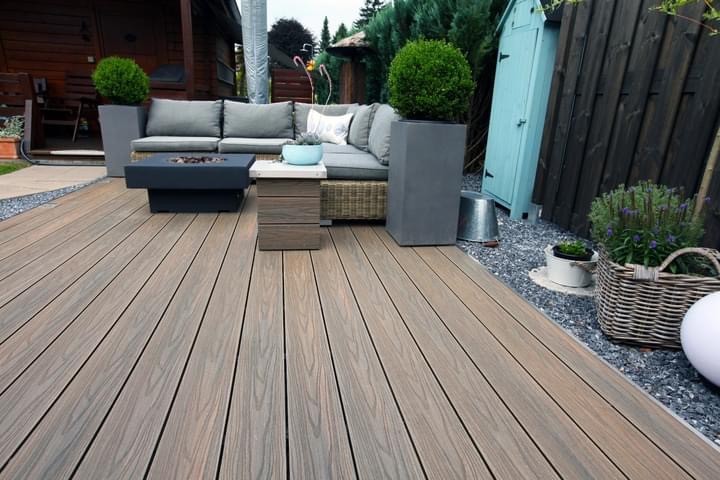
Wood–plastic composite (WPC) materials have become an increasingly important solution in modern landscape construction, offering a balance between functional performance, aesthetic integration, and environmental responsibility. In landscape environments, facilities such as signage systems, seating, decking, and railing structures are designed not only to serve practical purposes but also to enhance visual appeal and user experience. WPC materials demonstrate strong adaptability in these applications due to their material stability and design flexibility.
In signage applications, WPC materials are often combined with high-brightness color treatments to improve visibility and readability. This allows information to be quickly recognized and understood by visitors while maintaining visual harmony with the surrounding environment. Research into the mechanical behavior of WPC materials under constant temperature conditions shows that material composition plays a critical role in long-term performance. Performance analysis indicates that the wood–plastic ratio plays a decisive role in the creep behavior and bending strength of WPC materials. As bending load levels increase, the impact of the wood–plastic ratio becomes increasingly significant, while processing parameters such as screw speed gradually lose influence.
These findings highlight the importance of application-oriented material design. For boards used in landscape signage and wall panels, both processing parameters and material composition must be carefully controlled. In contrast, for decking and railing systems that are subjected to continuous loads, priority should be given to optimizing the wood–plastic ratio to ensure structural stability and durability.
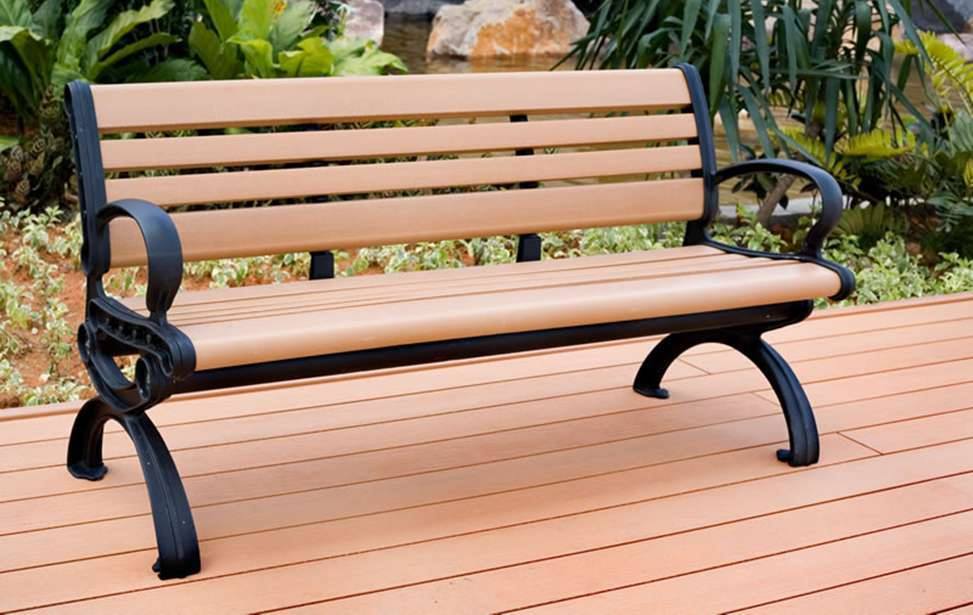
Further studies have focused on the stress relaxation and creep characteristics of WPC materials under specific temperature conditions. Results indicate that optimized formulations and the introduction of reinforcing structures can effectively reduce deformation over time. This is particularly relevant in seating applications, where long-term load-bearing performance and user comfort are critical. By incorporating reinforcing ribs and selecting appropriate profile designs, WPC seating systems can achieve improved mechanical reliability while maintaining a consistent visual appearance. Color coordination between seating and surrounding pavement further enhances the overall unity of landscape design.
In railing and safety-related applications, WPC materials must meet strict performance requirements. The use of high-strength connectors, sufficient embedment depth—typically exceeding 300 mm—and corrosion-protected metal components ensures long-term safety and stability. Although hollow-profile WPC materials are commonly used in landscape projects, structural safety can be further enhanced by filling internal cavities with solid wood inserts and securing them with mechanical fasteners.
Long-term performance factors such as creep deformation, moisture-induced expansion, and thermal expansion are key considerations in landscape applications of WPC products. These factors directly influence the service life and functional reliability of outdoor facilities. Modeling and performance analysis of WPC railing systems confirm the necessity of addressing these parameters during both product design and installation.
In conclusion, wood–plastic composite materials exhibit strong application potential in energy-efficient and sustainable landscape construction. By selecting WPC products with suitable colors, textures, and structural designs that align with the overall landscape concept, project developers can achieve visual consistency, reduced maintenance costs, and lower environmental impact. While WPC materials have already demonstrated successful applications in landscape structures, decking systems, and outdoor facilities, continued material optimization and technological innovation will further expand their role in future landscape and urban development projects.